
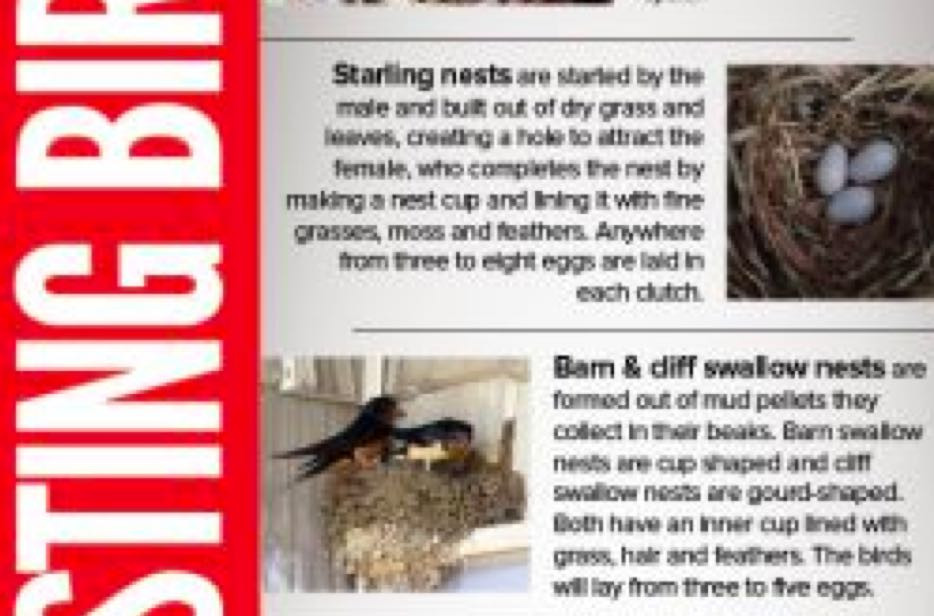
Facts About Starlings An Infographic
Pigeons can create a major problem for property owners and their managers. Regrettably, the larger the building, the bigger the problem and, in turn, more reason to exclude pigeons. For strip malls, warehouses, loading docks, hangars and other large structures, pigeons can quickly become a very costly nuisance. The birds often nest under awnings, overhangs, open roofs and covered beams in breezeways…
Pigeon Droppings: Damaging and Unsanitary
Pigeon droppings can be highly destructive. The acidic content of these droppings can eat into paint, plastic, metal, wood and even degrade stonework. Pigeon droppings can also deface and damage expensive signage—whether the signs are fabricated of metal, wood or plastic. For commercial and retail properties, pigeon droppings can create an image problem. Droppings on entryways, walkways, display windows, benches, umbrellas and nearby lampposts can be a turn off (calling for costly frequent cleanups). In addition, contact with pigeon droppings may pose a health risk, for they have been known to cause such diseases as histoplasmosis, cryptococcosis and psittacosis. This can pose a particular problem for any property that stores, prepares or serves food. In such venues, health inspectors have been known to shut down a property where evidence of bird droppings are present.
The Solution: Pigeon Netting
One of the most effective and humane ways to keep pigeons from your property is to seal them out with specially designed pigeon netting. The bird control pros at Bird B Gone offer just the right netting to keep pigeons out of areas where they don’t belong. It’s called Bird Net 2000, the #1 specified bird netting by architects and government agencies.
Specially fabricated of a tough UV-stabilized polyethylene mesh, this industrial strength bird netting is rot-proof, waterproof, and flame resistant. The netting is made up of six monofilaments, each 0.0012 thick and twisted together to produce a strong twine with 160-200 twists per meter. The durable netting is designed to withstand a wide range of temperatures—from -250F to +270F. It meets the requirement of ISO 1806 & 9001 Protocol Mesh Test for quality and mesh break strength. Each net is thoroughly inspected, tagged, and signed before leaving Bird B Gone’s warehouse. The netting is non-conductive, so it can be used around electrical systems and RF transmission systems without worrying about shorts or interference.